
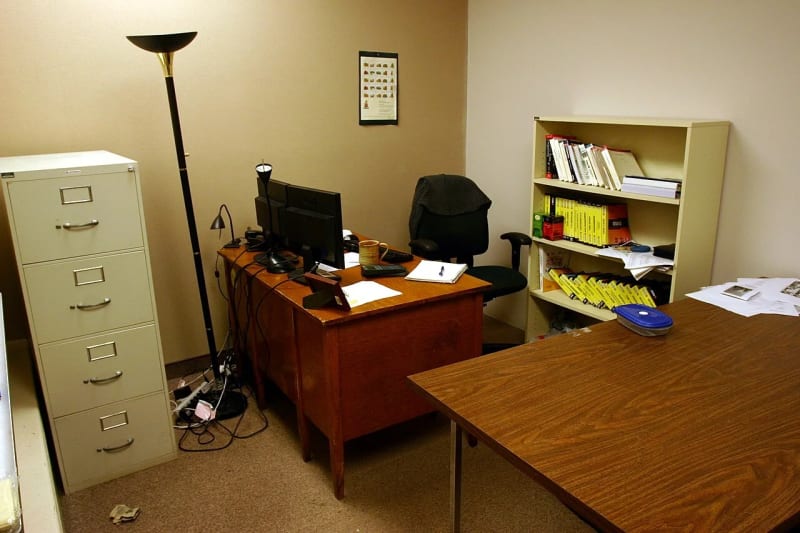
A small shop cannot always create a private office, but it can keep screens away from the queue and reserve a clear spot for reviewing paperwork. Position affects what bystanders can see.
Physical privacy begins with the layout of the desk
The design should support discreet confirmation of the intended account without asking a visitor to expose access codes in a crowded area.
What to verify at the counter
- Position devices away from the public queue.
- Keep printed records behind the counter.
- Provide a defined space for reviewing information.
Desk layout should support discreet conversations and document handling.
How the question arises in practice
A narrow kiosk rotates its display toward staff and uses a low divider for customer conversations.
What can a small counter change without renovating the shop?
Position the active device so someone waiting behind the customer cannot read its details. Reserve part of the desk for the current request and clear it before serving the next person. If a customer needs to show an account identifier, ask them to display only that information, not a login screen containing temporary codes. Keep receipts face-down or in a designated area until they are handed over. These changes are modest, but they limit routine exposure in a shared space. A private conversation about an uncertain status is also easier when staff avoid calling out full identifiers across the room. The objective is a clear verification process, not the appearance of a formal office.
Where a cramped counter reveals too much
A small service counter can protect privacy through layout rather than expensive renovation. Position the staff display so that people in the queue cannot read identifiers, leave enough space for a short private conversation, and store printed notes behind the counter. If the available room is narrow, even the direction of a chair or screen can help. The goal is not to hide the process from the customer but to prevent unrelated visitors from seeing information that belongs to someone else.
A clearer finish to the conversation
A layout review can begin with standing in the customer's queue and looking toward the desk. What parts of the active screen are visible from that position? Can someone read a handwritten identifier on the counter? Would moving the display or placing a small divider reduce accidental exposure? The exercise should focus on plausible sightlines, not on hypothetical sophisticated attacks. A welcoming retail space can still keep the details of one visitor's request away from others.
One simple test is to sit where the next customer would wait and observe the screen angle. If numbers can be read from that position, reposition the device or add a modest privacy barrier. The customer being served should remain able to review their own information.
A detail worth preserving
A well-placed device and a short conversation can reduce accidental disclosure while preserving normal customer service. Privacy depends on ordinary habits as much as technology.
The account-service procedures discussed at https://agentmobcashxbet.com/ are easier to explain when the counter has a designated space for sensitive checks, rather than relying on visitors to hide their screens themselves.
Further reading
Before Installing the MobCash Agent App
Protecting Customer Information in Shared Spaces
#CounterPrivacy #SafetyByDesign #RecordAccuracy